
Early Clocks | Lee Borrett

Thomas Browne's Only Known
Signed Lantern Clock and the
Origins of the Bristol School
Research for this article has been based principally upon the published works of George White, Brian Loomes, A. J. Moore, W. F. Bruce, Lee Borrett and Dr John Robey, whose scholarship on English lantern clocks and Bristol clockmaking is gratefully acknowledged.
“Among the surviving provincial lantern clocks of seventeenth-century England, few examples can rival the historical importance of the remarkable clock illustrated here.” Signed by Thomas Browne of Bristol, it is the only surviving lantern clock known to bear his name and is therefore the defining example of his work. Its significance extends far beyond its rarity. As the only securely signed lantern clock by Browne, it provides the essential benchmark against which every other clock attributed to his workshop can be judged. Without this unique survivor, many of those attributions would inevitably remain open to question.¹²³
The clock is equally important in the wider history of English clockmaking. During the middle decades of the seventeenth century, Bristol was emerging as one of England’s earliest provincial centres of domestic clock production, developing a distinctive style separate from that of London. Thomas Browne is now recognised as one of the principal makers responsible for establishing this regional tradition, and this signed clock stands at the very beginning of what has become known as the Bristol school of lantern clockmaking.²⁵ Only a small number of lantern clocks are now attributed to Browne, the great majority being unsigned. By preserving his signature together with the characteristic features of his workmanship, the present clock provides the secure point of reference from which Browne’s surviving output can be understood. It is not simply his finest documented clock; it is the foundation upon which the study of his work rests.¹²⁵⁷
Thomas Browne of Bristol
Thomas Browne was the son of James Browne, a Bristol blacksmith, and was admitted to the Freedom of the City in November 1643. Browne is therefore regarded as one of the earliest known makers of domestic clocks in Bristol whose work survives, occupying an important place in the city’s early horological history.⁵⁶
Although relatively few documentary records have survived, they provide valuable glimpses into his career. His daughter Sarah was baptised at All Saints, Bristol, on 18 October 1647, and later married William Smith, a watchmaker or clockmaker of Corston, Wiltshire.⁵⁶ A further record notes Browne having “put my clock in order” for an owner in Cardiff in 1662, while by 1665 he was working in Corn Street, Bristol. His final apprentice, his son James, was taken in 1672, and he is believed to have remained active until his death in 1680.⁵⁶ Stylistic evidence suggests that the surviving lantern clocks attributed to Browne belong principally to the period before about 1660, placing this remarkable signed example amongst the earliest and most important products of his workshop.¹²
The Signed Clock
The clock illustrated here is unique. It remains the only surviving lantern clock known to carry the signature of Thomas Browne of Bristol.¹²³
Its importance cannot be overstated. In the world of seventeenth-century provincial clockmaking, securely signed lantern clocks are exceptionally uncommon, and no other signed example by Browne is currently known. This single inscription transforms the clock from an outstanding period survivor into the definitive example of Browne’s work and the essential reference point for identifying every other lantern clock attributed to his workshop.¹²³ Equally striking is the quality of the clock itself. Rather than an isolated or experimental provincial production, it is a confident and accomplished piece of craftsmanship, reflecting the work of an established maker at the height of his abilities. The proportions are particularly elegant, with a well-balanced frame and refined overall appearance, while the engraving displays a fluency and assurance that immediately distinguishes it from more routine contemporary work.¹²³ Comparison with the other lantern clocks attributed to Browne suggests a date of around 1650, perhaps slightly earlier, placing it firmly within the middle decades of the seventeenth century when Bristol was beginning to establish its own distinctive identity as a provincial centre of clockmaking.¹²³

Fig. 1. The signed lantern clock by Thomas Browne of Bristol. Height 15.5 inches (40 cm). Private collection, Photographed by Lee Borrett
The most compelling feature of the clock is, without question, the boldly engraved signature on the front fret: “Thomas Browne in Bristoll.” ³
The spelling is entirely characteristic of the period, but it is the position of the inscription that is especially revealing. Rather than placing his name discreetly within the dial, Browne engraved it prominently across the front fret where it forms an integral part of the clock’s appearance. It is an unusually confident declaration of authorship, suggesting considerable pride in both his workmanship and his reputation.³
For collectors and historians alike, that signature is of immense importance. It provides the one secure link between documentary records and the surviving clocks attributed to Browne, allowing characteristic features of construction, engraving and design to be recognised across the wider group. Every attributed Browne lantern clock ultimately derives its credibility from comparison with this remarkable survivor.¹²⁵⁷
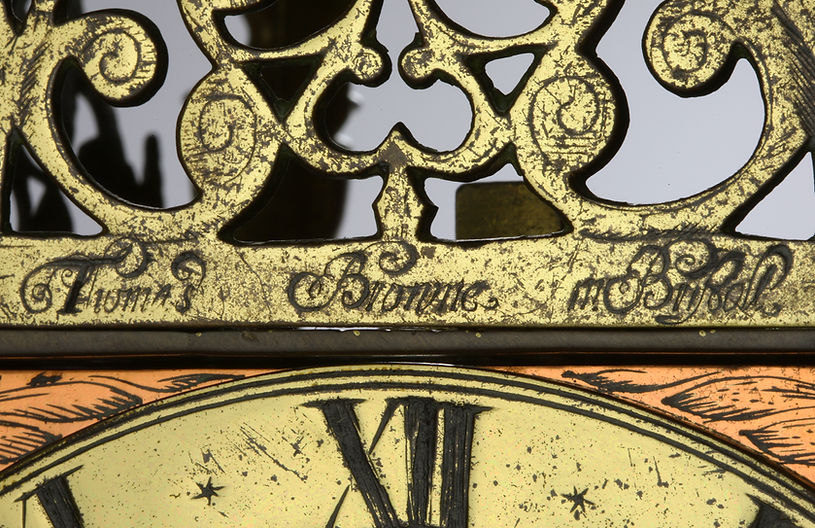
Fig. 2. The front fret with the signature ‘Thomas Browne in Bristoll’. Private collection, Photographed by Lee Borrett
The copper dial
The copper dial is one of the most distinctive and attractive features of the clock and immediately sets it apart from many contemporary provincial lantern clocks. Its warm colour, together with the restrained elegance of the engraving, gives the clock a character that is unmistakably its own and has become closely associated with Thomas Browne’s workshop.¹² A narrow brass chapter ring carries Roman numerals with delicate floating star half-hour markers, surrounding an engraved copper centre decorated with flowing garlands and Tudor roses. Beneath XII appears a small but wonderfully expressive whimsical mask, one of the most charming details on the entire clock.¹²⁷ Although easily overlooked, this little mask has become one of the defining features of Browne’s work. It appears on a number of lantern clocks attributed to his workshop and provides an important point of comparison when considering unsigned examples. Together with the distinctive engraving, chapter ring and overall layout, it forms part of the recognisable artistic vocabulary that links the surviving Browne clocks into a coherent workshop tradition.¹²⁷
The engraving is confident and accomplished throughout. The garlands are crisply executed, the Tudor roses carefully balanced within the design, and the dial possesses an individuality that lifts it well above the merely decorative. It is immediately apparent that the engraver was both experienced and assured, producing a dial that is elegant without being over-elaborate.¹² The alarm disc and long-tailed iron hand are both original, adding considerably to the importance of the clock as a remarkably complete survivor from the middle of the seventeenth century.¹³

Fig. 3. The engraved copper dial centre displaying garlands and Tudor roses with a whimsical mask beneath XII. Private collection, Photographed by Lee Borrett
Fig. 4. A close-up of the small mask. It also appears on the other clocks attributed to Thomas Browne’s workshop. Private collection, Photographed by Lee Borrett

The frame and pillars
The elegant proportions of the frame immediately reflect the quality of Browne’s workmanship. The castings are clean and well finished, the construction is precise, and the clock possesses a pleasing balance that demonstrates the confidence of an experienced maker.¹² The top and bottom plates are slotted into integral corner pillars, with the feet and finials cast as one with the pillars themselves. The side doors also appear to be original, further enhancing the exceptional state of preservation.
The corner pillars are particularly significant in understanding the development of Browne’s workshop. This clock is fitted with square-based integral pillars terminating in acorn feet and finials.¹² When the surviving lantern clocks attributed to Browne are considered together, they appear to fall broadly into two related groups: those with rounded integral pillars and those, like the present clock, with square-based pillars.¹²⁸ This is more than a minor structural variation. It represents an important stage in the evolution of Browne’s workshop and provides valuable evidence for placing individual clocks within his developing output.
The present clock closely resembles Browne’s attributed lantern clock dated 1649, sharing both square-based integral pillars and a copper dial.¹²⁸ Taken together, these features suggest that by about the middle of the seventeenth century Browne had established a settled workshop style that was both distinctive and immediately recognisable.
As the only signed example, this clock provides the secure benchmark against which these structural details can be compared, making it indispensable in understanding the evolution of Browne’s surviving work.¹²
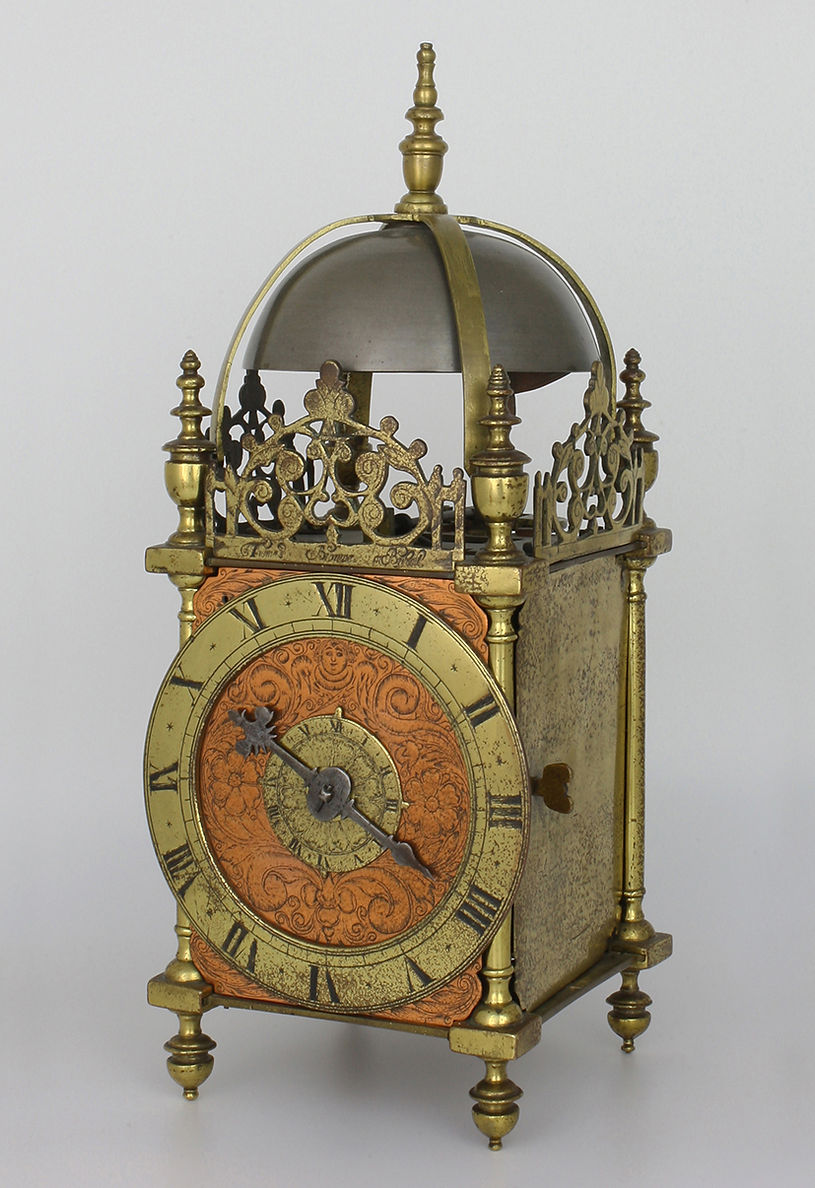
Fig. 5. The top and bottom plates are slotted into the integral pillars, with finials and acorn feet. Private collection, Photographed by Lee Borrett
Fig. 6. Showing the signed Thomas Browne of Bristol Lantern clock hanging from an iron wall hook. Photograph courtesy of Darrell Dipper

The movement
The movement is of the classic early lantern clock form, being weight-driven with hour striking on a bell. Built around cruciform front and rear movement bars, it follows established seventeenth-century practice while displaying several features that distinguish Browne’s work from that of many contemporary London makers.¹² One particularly noticeable characteristic is the shape of the movement bars. Their broad, straight arms lack the upturned and downturned terminals so often encountered on London lantern clocks, giving the movement a more restrained appearance that has become recognised as part of the Bristol tradition.²⁵
Closer examination reveals further details that are equally characteristic of Browne’s workshop. The hammer stop is attractively shaped, while the hammer spring is unusually slim and elegantly waisted.¹² The dial and chapter ring are secured to the front movement bar by a long upper lug retained with a taper pin, another recurring feature found on clocks attributed to Browne. Small brass collets remain fitted to the wheel arbors, providing further evidence of the consistency found throughout the surviving group.¹²⁸

Fig. 7. Left-hand side of the movement. Private collection, Photographed by Lee Borrett
Fig. 8. Right-hand side of the movement. Private collection, Photographed by Lee Borrett

Fig. 9. Close-up of the decorated hammer stop and slim waisted hammer spring. Private collection, Photographed by Lee Borrett

Like the great majority of pre-pendulum lantern clocks, the movement was converted at an early date from its original balance-controlled verge escapement to anchor escapement. As Dr John Robey has demonstrated in his comprehensive study of lantern clock conversions, such alterations were both common and entirely expected as owners sought to improve timekeeping following the introduction of the pendulum.⁹ During this conversion the train was adapted to Huygens’ endless-rope maintaining power and the original alarm work was removed. These alterations almost certainly took place during the seventeenth century and form part of the clock’s working history rather than representing later restoration.⁹ Importantly, the movement survives in remarkably original condition. Much of its early fabric remains intact, including the wheelwork, tapered arbors and numerous original constructional details, making it an exceptionally important example for the study of early provincial lantern clockmaking.¹
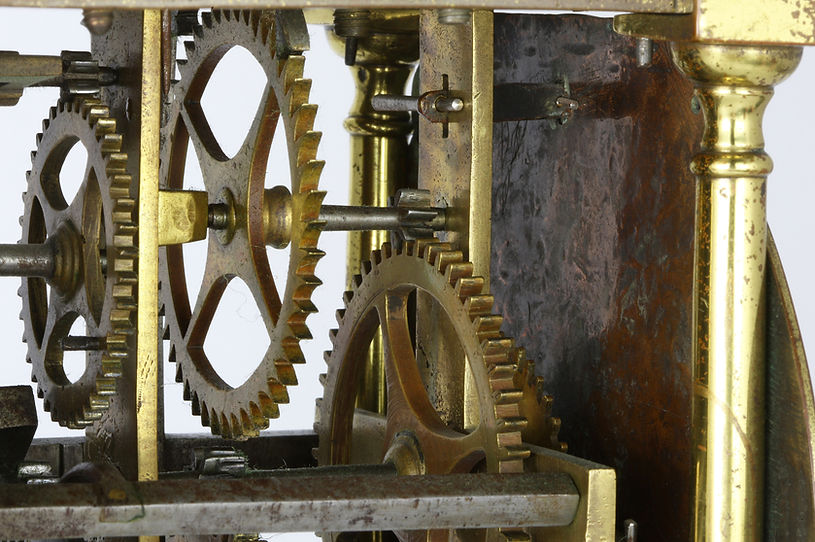
Fig. 10. Close-up of the movement with a large brass collet on the later
escapewheel and smaller original brass collets. The chapter ring and dial are
attached to the front movement bar by a long upper lug. Private collection, Photographed by Lee Borrett

Fig. 11. Front of the movement with the hour wheel removed. The arms of the movement bars are straight, without up- and down-turned ends. Private collection, Photographed by Lee Borrett
Fig. 12. Rear of the movement showing the large
number of teeth on the escapewheel of the later
anchor escapement. Private collection, Photographed by Lee Borrett
Below. Showing a close-up view of from the other side of the massive brass and iron lantern movement Private collection, Photographed by Lee Borrett

Fig. 13. The top plate showing the early conversion to an anchor escapement. Private collection, Photographed by Lee Borrett

Fig. 14. A rear view, also showing the early conversion to an anchor escapement. Private collection, Photographed by Lee Borrett

Browne’s developing style
One of the greatest values of the signed clock is the way it allows Browne’s surviving lantern clocks to be viewed as the products of a single developing workshop rather than as isolated examples. When considered together, they reveal a remarkable consistency of design, construction and engraving, while also showing a gradual refinement of Browne’s workshop style over time.¹²⁸
Broadly speaking, the surviving clocks display two recurring characteristics: integral corner pillars, either rounded or square-based, and dials made in either brass or copper. Rather than representing unrelated variations, these features appear to illustrate the natural development of Browne’s workshop during the 1640s and early 1650s.¹²⁸
The earliest clocks attributed to Browne seem to employ rounded integral pillars together with brass dials, while examples dating from the mid-1640s increasingly favour copper dials. By 1649, a clock attributed to Browne combines a copper dial with square-based integral pillars, precisely the same combination found on the present signed clock.¹²⁸ This progression suggests a workshop steadily refining its own distinctive identity during the difficult years of the Civil War and Commonwealth. By around 1650 that identity appears fully established, and the present clock represents the clearest surviving expression of Browne’s mature style. Both its construction and decorative details are entirely consistent with this date.¹²³
One intriguing aspect of Browne’s work is his frequent use of copper dials. Whether this reflected personal preference, the availability of materials, or a deliberate attempt to distinguish Bristol-made clocks from those produced in London remains uncertain. Whatever the reason, the result was the creation of a workshop style that is immediately recognisable today and one that played a significant role in establishing Bristol as one of England’s earliest provincial centres of clockmaking.²⁵

Fig. 15. The signed Thomas Browne clock about 1650, with a copper dial and conventional square-based integral pillars (left), beside a clock attributed to Browne about 1642–4, with a brass dial and rounded integral pillars (right). Both dials have garlands and a Tudor rose. Private collection, Photographed by Lee Borrett
Bristol school
The beginnings of the
Although Bristol never produced clocks on the scale of London, it developed one of the earliest and most distinctive provincial traditions of clockmaking in England. Among the surviving makers associated with that tradition, Thomas Browne occupies a position of particular importance. His work combines refined craftsmanship with a series of recurring decorative and structural features that together define what is now recognised as the Bristol school of lantern clockmaking.¹²⁵⁷ The present clock lies at the heart of that story. As the only known signed lantern clock by Browne, it provides the one secure point of reference against which the remaining clocks attributed to his workshop can be assessed. Without it, the defining characteristics of Browne’s work would be far less certain.¹²³
A careful comparison of the surviving clocks attributed to Browne reveals a remarkably consistent workshop tradition. Characteristic features include:
-
finely engraved dial centres with garlands and Tudor roses¹ ² ⁷
-
the small mask below XII¹ ² ⁷
-
a narrow chapter ring with floating star half-hour markers¹ ²
-
integral corner pillars, either rounded or square-based¹ ² ⁷
-
a long upper lug securing the dial and chapter ring to the front movement bar¹ ² ⁷
-
a slim waisted hammer spring¹ ²
-
and small brass collets on the wheel arbors.¹ ² ⁷
Individually, none of these features is conclusive. Collectively, however, they form a highly distinctive pattern that links Browne’s surviving clocks into a coherent body of work. The signed clock provides the secure foundation upon which those comparisons are made and allows the development of Bristol’s earliest identifiable workshop tradition to be understood with confidence.²⁵
Comparison with
When viewed alongside the earlier unsigned lantern clocks attributed to Thomas Browne, the importance of the present example becomes even clearer. It is not an isolated survival but the defining clock within a recognisable body of work sharing the same artistic and structural vocabulary.¹²⁸ Across the attributed group there is a striking consistency in both design and execution. The engraved dial centres, with their flowing garlands and Tudor roses, the expressive mask beneath XII, the elegant proportions of the chapter ring and the restrained character of the frame all point towards the work of a single accomplished workshop.¹²⁸
At the same time, the signed clock appears to represent Browne’s workshop at its most mature. Its square-based integral pillars, copper dial and confident workmanship suggest a maker whose style had become fully established by the middle of the seventeenth century.¹²⁸
It is this combination of originality, quality and secure attribution that gives the clock its exceptional importance. As the only known signed example, it not only confirms the identity of Browne’s workshop but also provides the standard by which every other attributed lantern clock can be judged.¹²³
Browne’s earlier work
Conclusion
Few provincial lantern clocks can claim such historical importance.
As the only known signed lantern clock by Thomas Browne of Bristol, this remarkable clock provides the essential benchmark for identifying his surviving work and understanding the emergence of one of England’s earliest provincial schools of clockmaking. It securely links the documentary record with the surviving clocks attributed to Browne and offers a unique insight into the development of a distinctive Bristol workshop during the middle years of the seventeenth century.¹²⁵⁷ Beyond its historical significance, the clock is an exceptionally accomplished piece of craftsmanship. Its elegant proportions, beautifully engraved copper dial, boldly signed front fret and remarkably original movement together demonstrate the work of a maker whose confidence and individuality are evident in every detail. More than three and a half centuries after it was made, it remains both an object of considerable beauty and a document of lasting historical importance.¹²³
For collectors, historians and students of early English horology alike, this is far more than a rare signed provincial lantern clock. It is the defining example of Thomas Browne’s work, the cornerstone for identifying his surviving output, and the clock from which the story of the Bristol school can truly be told.
It deserves to be regarded not simply as an outstanding survivor, but as one of the most important provincial lantern clocks of the seventeenth century.
Acknowledgements
I am particularly grateful to Dr John Robey for his generous technical advice on early lantern clocks and for so willingly sharing his extensive knowledge of seventeenth-century movements and their development.
My sincere thanks are also due to my clock friend Martin Gould, whose enthusiasm, encouragement, knowledge and generosity have been an invaluable source of support throughout the research and preparation of this article.
References
-
George White, English Lantern Clocks (Antique Collectors’ Club, 1989), pp. 222–230.
-
Brian Loomes, Lantern Clocks & Their Makers (Mayfield Books, 2008), pp. 174–178.
-
W. F. Bruce, Early English Lantern Clocks 1600–1700 (Exhibition Catalogue, 2013), section History in Motion: Thomas Browne c.1650.
-
Antiquarian Horology, March 2010, p. 13.
-
Brian Loomes, Clockmakers of Britain 1286–1700 (Mayfield Books, 2014), p. 79.
-
Brian Loomes, “Bristol Style”, Clocks, October 2006, pp. 7–11.
-
A. J. Moore, The Clockmakers of Bristol (Bristol Branch of the Antiquarian Horological Society, 1999), p. 115.
-
Lee Borrett, “A Civil War Lantern Clock Attributed to Thomas Browne of Bristol”, Clocks, May 2021, pp. 9–13.
-
John A. Robey, “Lantern Clock Conversions – A Technical Survey”, Antiquarian Horology, Vol. 46, No. 1 (March 2025), pp. 48–68.
Historical Context
It is interesting to note that Thomas Browne was admitted to the freedom of the City of Bristol in November 1643, only a few months after one of the most dramatic events of the English Civil War—the Storming of Bristol on 26 July 1643. During the assault, Prince Rupert’s Royalist army captured the city from the Parliamentarian garrison after fierce fighting that resulted in heavy casualties on both sides. At the time, Bristol was England’s second city and one of the country’s most important west-coast ports, making it a prize of considerable strategic importance to both Royalists and Parliamentarians.
Browne’s admission as a freeman therefore came at a time when Bristol was recovering from the immediate aftermath of siege, bombardment and military occupation. Although there is no evidence that Browne himself was directly involved in these events, the political upheaval and disruption to daily life must inevitably have affected those living and working within the city. His emergence as an established clockmaker during this turbulent period makes the survival of his signed lantern clock all the more remarkable.
The Storming of Bristol
26th of July 1643
Please click the image below

The Storming of Bristol. Alamy.com
Map of Corne Street in
Bristol, 1673

Above. Close-up detail from Millerd's Map of Bristol, 1673, showing the walled town and Corne Street where Thomas Browne worked until his death in 1680. Public domain, via Wikimedia Commons
