
Early Clocks | Lee Borrett
The
Stables Clock

Introduction

The Clock

Above. Showing the eight-day, two-train flat-bed turret clock made in 1895 by W. H. Bailey of Manchester. The clock now stands upon its later hardwood frame for indoor display.Photograph by Lee Borrett

Above and below. Close-up views of W. H. Bailey’s remarkably original and complete movement, retaining its wheelwork, pinions, deadbeat escapement, bevel-gear linkage and winding handle. Photograph by Lee Borrett

Below. Side-view close-ups of W. H. Bailey’s escape wheel and deadbeat escapement. Photograph by Lee Borrett

Below. Showing the original W. H. Bailey bronze bell and one-second pendulum. Photograph by Lee Borrett

Below. Showing the Newfield Hall Stables Clock mounted on its later hardwood frame for indoor use. Photograph by Lee Borrett
The
Antiquarian
Horological Society
When the owners of Newfield Hall, the Holiday Fellowship, decided in 1991 to replace the now very dirty and non-working stables clock with a modern quartz clock, they contacted the Turret Clock Group of the Antiquarian Horological Society (AHS). The area below the clock, into which its heavy driving weights descended, was required for conversion into additional bedroom accommodation.
The late Mike Bundock, a highly experienced AHS member who would later become Chairman of the Turret Clock Group, purchased the Newfield Hall clock for his private collection together with its surviving accessories. In his spare time Mike spent many hours lovingly and professionally restoring the clock, returning it to good working order while preserving its remarkably original condition.
The clock retains its original dial, one-second pendulum, bronze bell, weights, wheelwork, pinions, deadbeat escapement, bevel-gear linkage and winding handle. W. H. Bailey were known to use wooden hands on a number of their turret-clock dials. The original wooden hands on this clock had unfortunately deteriorated beyond use, so Mike asked his lifelong friend and fellow AHS member, the late John Moon, to make replacements. John, a highly regarded carpenter and cabinetmaker, carefully reproduced the original Bailey hands in mahogany.

Above. Close-up of the original 24-inch-diameter W. H. Bailey iron dial, complete with the replacement mahogany hands made by the late John Moon, who carefully copied the deteriorated original Bailey hands. Photograph by Lee Borrett
Reuniting
The Lost Bell
When I purchased the clock in about 1996, its original W. H. Bailey bell was missing. The late Mike Bundock told me that the bell was believed still to be somewhere in the vicinity of Newfield Hall, so I decided to place an S.O.S. advertisement in the local newspaper in the slim hope that somebody might recognise it.
Amazingly, a former gardener at Newfield Hall contacted me and told me that she had the original Bailey bell. I was therefore able, in 1997, to reunite the clock with its bell after they had been separated for several years. The bell was in a very dirty condition, so I subsequently had it professionally cleaned to complement the clock, which was now going to be preserved and displayed indoors.

Above. Showing the S.O.S advert to find the original Bailey Bell.
Below. Found! Amazingly, the S.O.S. advertisement paid off and the lost original bell was reunited with the Newfield Hall Stables Clock in 1997.

Below. Close-up of the professionally cleaned original W. H. Bailey bronze bell, measuring approximately 13 inches by 14 inches and now preserved indoors with the clock. Photograph by Lee Borrett

Newfield Hall
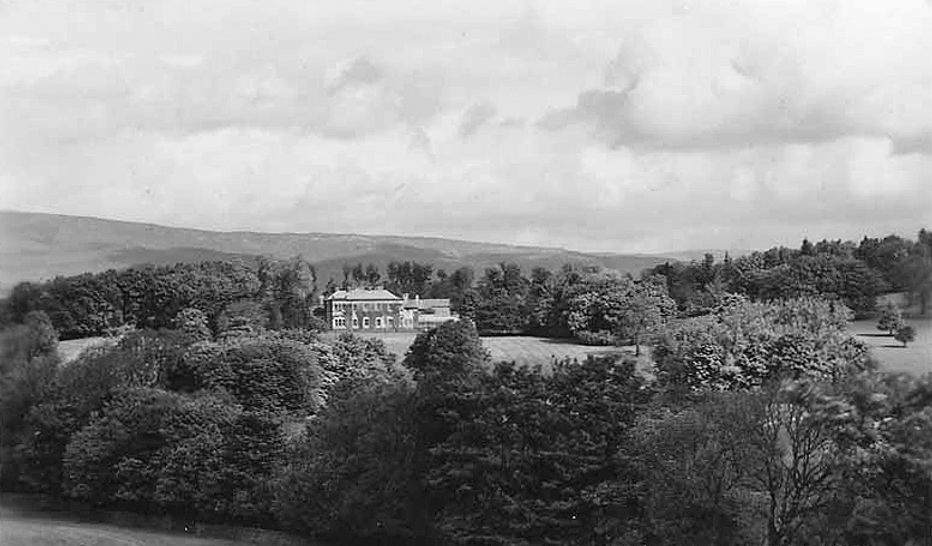
Newfield Hall, a country house in Airton, North Yorkshire. Image courtesy of KirkbyMalham.info
Newfield Hall is a former country house situated approximately one mile southeast of Airton in North Yorkshire. It was designed by the Lancaster architect E. G. Paley for William Nicholson Alcock at a reported cost of £36,000. Construction had begun by 1855 and the house was completed in 1856. Alcock was a lawyer who had moved to Gloucestershire by 1881.
Above and Below. Newfield Hall and its estate were sold in 1890 to William Illingworth, a retired Bradford worsted manufacturer. Images courtesy of KirkbyMalham.info

Below. Showing a rare Victorian photograph of William Illingworth (centre) pictured outside the house, possibly with his tenants. Image courtesy of KirkbyMalham.info

Left. It was William Illingworth who purchased the clock from Bailey in 1895. Image courtesy of KirkbyMalham.info
Newfield Hall was sold again in 1901 to John William Morkill, who later served as High Sheriff of Yorkshire in 1929–30 and as a Deputy Lieutenant. Morkill also wrote the important local history The Parish of Kirkby Malhamdale, published in 1933.
Below. The Parish of Kirkby Malhamdale written by Mr John William Morkill.

Left. Showing a page from Mr Morkills book published in 1933.
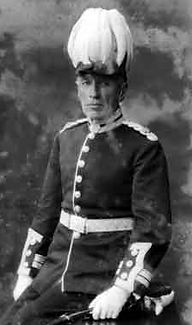
Mr John William Morkill, owner of Newfield Hall from 1901, served as High Sheriff of Yorkshire in 1929–30.

Above and Below. Images of the inside of Newfield Hall, showing the magnificent entrance hall. Images courtesy of KirkbyMalham.info

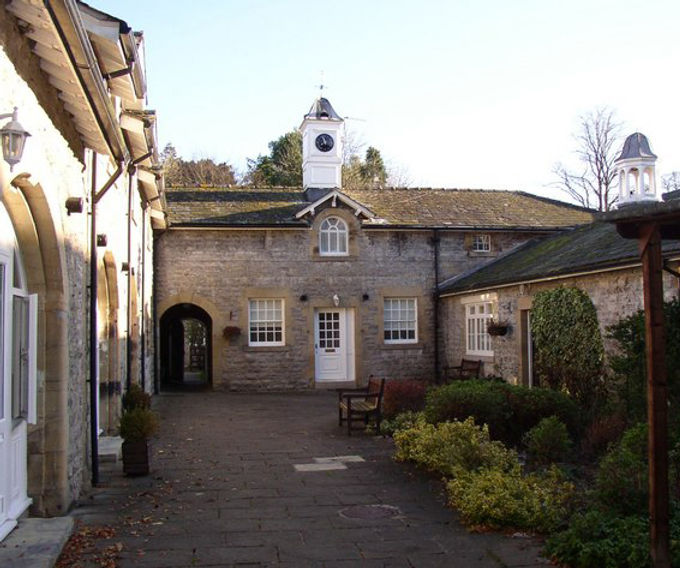
During the 1930s the Newfield Hall estate was broken up. The house was leased to the Holiday Fellowship, while the remainder of the estate was sold to All Souls College, Oxford. In 1991 the Fellowship required additional bedroom accommodation and decided to utilise the area through which the clock’s driving weights descended. Having served Newfield Hall for almost a century, the original Bailey clock was therefore removed and replaced with a modern quartz clock.
Turret Building
Stable Courtyard

Above. The Newfield Hall stable courtyard in 1990, with the original W. H. Bailey turret clock illustrated in this article still installed in the turret building shortly before its removal. Image courtesy of KirkbyMalham.info.
Below. The Newfield Hall stable courtyard in more recent times. The original 1895 Bailey clock has been replaced by a modern quartz clock, with additional accommodation created beneath. Image courtesy of KirkbyMalham.info.
A
W.H. Bailey, Salford
Brief history of

Above. Image from John Davies's facebook post 'We grew up in Salford'. Sir William H. Bailey was knighted by Queen Victoria on the royal yacht in 1894 - on the occasion of Her Majesty opening the Manchester Ship Canal.
William Henry Bailey was born at Salford on 10 May 1838 and attended Manchester Grammar School until the age of fourteen. On leaving school he joined his father at the Albion Works in Salford.
In 1865 William took control of the business following his father’s retirement. The company became W. H. Bailey & Co. in 1876 and W. H. Bailey & Co. Ltd in 1889. Bailey entered Salford Town Council in 1874, became an alderman in 1880 and served as Mayor of Salford in 1893. In 1894 he was knighted by Queen Victoria aboard the Royal Yacht Victoria and Albert on the occasion of the opening of the Manchester Ship Canal.
Sir William Henry Bailey died in 1913, after which the company traded as Sir W. H. Bailey & Co. Ltd. The firm continued through the twentieth century, later becoming part of Yorkshire Metals and eventually, following further changes of ownership and name, IMI Bailey Valves Ltd.

Above. The W. H. Bailey factory at Salford, Manchester. In addition to turret clocks and watches, the company manufactured an extraordinary range of engineering products, including steam-pressure recorders and gauges, pumps, regulating valves, pyrometers, barometers, fire engines, tide recorders, lubricators, turnstiles, lifts, hoists, injectors and boiler fittings.

W. H. Bailey published numerous editions of their illustrated catalogues, while the company’s products were also widely advertised in contemporary engineering journals and technical publications.

Above. Showing the front cover of Bailey's Illustrated and Useful Inventions Seventeenth Edition (Circa 1880). Edited by the late Chris McKay in 2017.
Below A W. H. Bailey turret clock of the same general type, illustrated on a different stand in Bailey’s Illustrated and Useful Inventions, Seventeenth Edition (c.1880), reproduced in the 2017 edition edited by the late Chris McKay.

Below. An advertisement from a slightly later W. H. Bailey catalogue, dating from around the early 1890s. The Hampton Court Stables clock illustrated is strikingly similar in construction to the Newfield Hall example made in 1895.

Summary
More than 130 years after it was made, the Newfield Hall Stables Clock survives as a remarkably complete example of Victorian turret clockmaking and as a tangible link with the history of Newfield Hall itself. Made by W. H. Bailey of Salford in 1895 for William Illingworth, it faithfully served the stable courtyard for almost a century before changing circumstances brought its working life at the Hall to an end.
Its subsequent history is equally fascinating. Rescued in 1991 by the late Mike Bundock of the Antiquarian Horological Society, painstakingly restored while retaining its original mechanism, and later reunited with its long-lost original bronze bell following my newspaper appeal, the clock has enjoyed a remarkable journey of survival.
Today its original dial, movement, wheelwork, pendulum, weights, bell and winding handle preserve an unusually complete record of the work of W. H. Bailey. For me, however, its importance goes beyond the machinery. This is the actual clock that once looked out across the stable courtyard of Newfield Hall, marking the passing hours for the household, estate workers and generations of people who lived and worked there. Its survival allows a small but wonderfully evocative part of Victorian country-house life to continue ticking more than a century later.
